
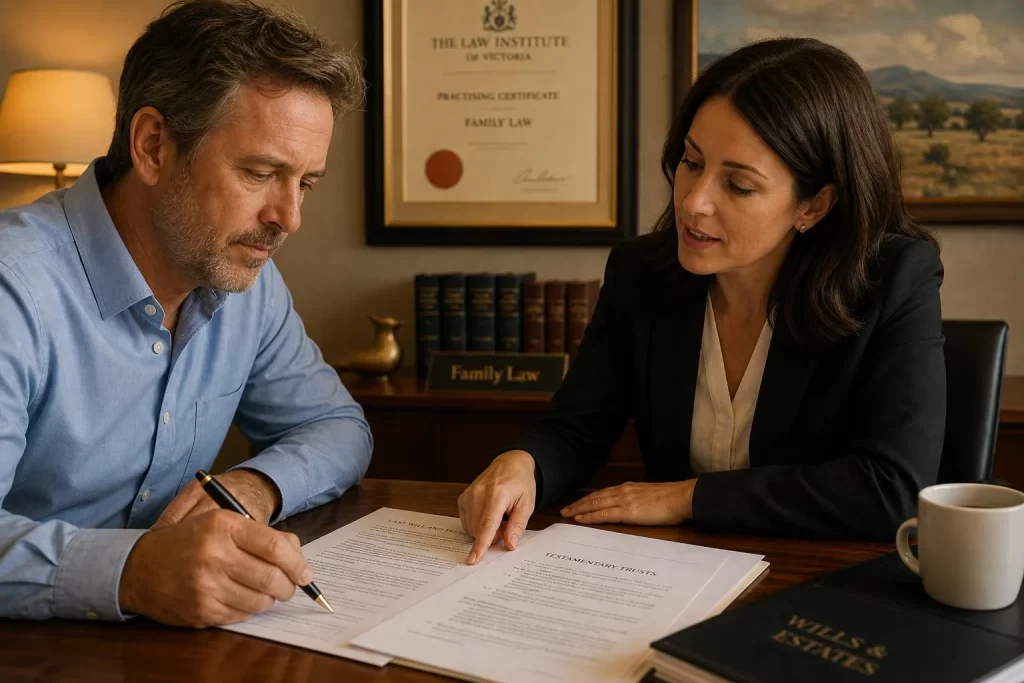
Will drafting with testamentary trusts involves preparing a valid Australian will that establishes a trust commencing on death, letting trustees manage and distribute assets for beneficiaries. It can enhance asset protection and offer tax flexibility under federal rules. Robust drafting, correct witnessing, and trustee selection are essential to ensure compliance and intended outcomes.
Key Legal Points
- A testamentary trust is a trust created by a will that starts on death
- Will drafting must meet capacity, intention, and witnessing rules for validity
- Trusts improve asset protection, control, and tax flexibility for beneficiaries
- Family provision claims can still alter estate distributions despite trusts
- Choose capable trustees and plan appointor succession to maintain control
- Align superannuation nominations to ensure the trust is properly funded
- Trustees must keep records, lodge tax returns, and follow the trust terms
Will drafting with a testamentary trust means creating a valid will that establishes a trust to commence on your death. A testamentary trust holds and manages assets for beneficiaries under a trustee’s control, usually to improve asset protection, tax flexibility, and inheritance protection.
Definition of Testamentary Trusts in Australian Wills
What a Testamentary Trust Means
Testamentary trust means a trust created by a will that only starts after the will-maker dies. Trustees manage assets for named beneficiaries according to the terms set out in the will.
- Arises on death through probate, not during life
- Governed by the will’s trust provisions and general trust law
- Can be fixed, discretionary, protective, or special disability trust
- Can run for multiple generations within perpetuity limits
- Gives flexibility on timing and form of distributions
How a Testamentary Trust Sits within a Will
The will contains trust terms, appoints trustees, and defines beneficiaries. It can create multiple trusts, for example one per child, or a single family trust. Good will drafting clarifies powers, vesting dates, and fallback plans if a beneficiary dies first.
What People Commonly Search For
- Benefits of testamentary trusts compared with simple wills
- Legal requirements for valid will drafting that creates a trust
- Tax effects for children and adult beneficiaries
- How trusts protect inheritances in family law or insolvency scenarios
- Steps and costs to include a testamentary trust in your estate planning
Understanding the Legal Framework for Will Drafting
Succession and Trust Law Settings
While succession law is state based, federal tax rules strongly influence design. Core will drafting requirements include testamentary capacity, intention, and witnessing under each state’s Succession Act, with trusts then operating under general trust law principles.
Tax Treatment and Minors
Distributions from a testamentary trust to minors may be taxed as excepted trust income, often at adult marginal tax rates if conditions are met. See the ATO guidance on testamentary trusts for current requirements and examples.
Family Provision Pressures
Even strong will drafting cannot fully block family provision claims. Structuring trusts and providing reasons can reduce risk. For context on eligibility and strategy, see Contesting A Will In Australia.
Benefits of Including Testamentary Trusts
Asset Protection and Control
In real scenarios, we see trusts reduce exposure if a beneficiary divorces or becomes bankrupt, and help control spending for vulnerable beneficiaries. Trustees can stagger or condition distributions to safeguard capital.
Tax Flexibility
Discretionary testamentary trusts can stream income among family members, subject to tax law. Careful will drafting can allow franked distributions, capital gains streaming, and income splitting within legal limits.
Tailoring to Family Situations
Common patterns include separate trusts for adult children, a protective trust for a spendthrift beneficiary, or a special disability trust. Estate planning that anticipates blended families can reduce future disputes.
Requirements and Procedures for Will Drafting with Trusts
Step-by-step Process
- Define objectives: asset protection, tax efficiency, care for minors or vulnerable persons
- Identify assets and entities: home, superannuation death benefits, business interests
- Choose trustees and appointors, and set replacement mechanics
- Draft trust terms: beneficiaries, powers, vesting date, guardian or protector
- Meet execution formalities, including correct witnessing
- Review superannuation nominations and insurance ownership
- Update enduring powers, letters of wishes, and asset registers
- Revisit every 2–3 years or on major life events
Documentation Needed
Good will drafting collates asset schedules, family details, company and trust deeds, and superannuation nomination records. A trustee guidance memo and letter of wishes help future decision making without creating binding directions.
Choosing Trustees and Appointors
Trustees must be capable and conflict aware. Appointor or principal roles control trustee changes, so include succession plans for those roles to prevent deadlock.
Common Mistakes in Will Drafting with Testamentary Trusts
What to Avoid
- Leaving trust powers too narrow, making administration impractical
- Failing to address superannuation nominations and binding directions
- Appointing conflicted trustees without safeguards or co-trustees
- Ambiguous beneficiary definitions that invite disputes
- Omitting foreign person duty or land tax considerations
Real-world Examples
We often see disputes where a single sibling trustee controls distributions without clear conflict rules. Another pattern arises when superannuation death benefits pass outside the estate, frustrating the trust’s funding intent.
Deadlines, Limits, and Costs
Time Factors
Probate timeframes range from a few weeks to several months, depending on court backlogs and asset complexity. Trust administration timelines vary; early trustee appointments and asset inventories reduce delays.
Financial Considerations
Professional will drafting with testamentary trusts usually costs more than a simple will, reflecting complexity. Ongoing costs may include trustee fees, accounting, and tax returns. Where significant assets are involved, the benefits typically outweigh the expenses.
Ongoing Compliance
Trustees must keep records, lodge tax returns, and comply with trust deed terms. If real property is held, land tax and duty issues may arise, especially across states and territories.
Consequences of Poor Will Drafting
What Happens if Requirements Are Not Met
A defective will risks intestacy or an invalid trust clause. That can trigger unintended distributions under state intestacy rules or force assets into a basic estate pool, losing asset protection and tax advantages.
Compliance Requirements
Trustees who misapply funds may face personal liability. Clear trust powers, prudent investment clauses, and conflict management provisions minimise risk and guide compliant decision making.
How to Proceed and Get Professional Help
Practical Guidance
Start by clarifying family goals, mapping assets, and identifying risk factors. Ensure your superannuation nominations align with the trust plan and test different funding scenarios before finalising will drafting.
Recommended Actions
Commission tailored clauses that address tax streaming, control succession, and dispute minimisation. Review your estate plan regularly, particularly after marriages, separations, births, business sales, or material asset changes.
Specialist Support
Expert assistance with wills and trusts is available through Testamentary Trust Wills. For broader context on why formal documents matter, see Why You Need A Will In Australia for practical considerations and common pitfalls.
Using Will Drafting to Strengthen Inheritance Protection
Examples of Effective Structures
For a family business, will drafting might place shares in a discretionary testamentary trust with corporate trustee control. For young children, separate trusts with staggered vesting ages can fund education while preserving capital.
Interaction with Powers of Attorney
Although powers of attorney cease on death, decisions made during incapacity can affect what the testamentary trust receives. Align your will drafting with your enduring power documents to avoid asset ownership gaps.
Checklist for Will Drafting with Testamentary Trusts
Key Action Points
- Confirm capacity and proper witnessing
- Define beneficiaries and trustee powers clearly
- Align superannuation nominations with trust funding
- Plan appointor succession and dispute mechanisms
- Model tax outcomes for likely distributions
- Schedule periodic reviews and trustee education
Short Timeline Guide
Plan, draft, execute, then integrate superannuation and insurance. After death, seek probate, constitute the trust, transfer assets, and commence compliant administration.
Frequently Asked Questions
When should I consider a testamentary trust instead of a simple will?
Consider a testamentary trust if beneficiaries are minors, vulnerable, at risk of bankruptcy or divorce, or if you seek tax flexibility and asset protection. It is also useful where there are business assets, blended families, or a desire to stagger inheritances over time under trustee control.
Who should be the trustee of a testamentary trust?
Choose a capable, trustworthy person or a professional trustee, and consider appointing co-trustees. Include a plan for appointor succession so that trustee changes can be managed. Avoid conflicts of interest or mitigate them with safeguards and clear decision-making rules in the deed.
How are children taxed on income from testamentary trusts?
If the trust meets legal requirements, distributions to minors may be treated as excepted trust income and taxed at ordinary adult rates. The ATO sets conditions, so trustees must ensure the trust is appropriately funded from the deceased estate and maintain proper records for compliance.
Can a family provision claim defeat a testamentary trust?
A successful claim can alter who receives what from the estate, potentially reducing or reshaping trust funding. Well-reasoned planning, letters of wishes, and proportionality can help defend the will. However, courts have wide discretion and outcomes depend on statutory factors in each jurisdiction.
Do powers of attorney affect testamentary trusts?
Powers of attorney end on death, but decisions made during the will-maker’s incapacity can influence which assets the estate owns at death. Aligning your enduring powers with your will helps ensure assets are held in forms that allow the testamentary trust to be properly funded.
How often should I review a testamentary trust will?
Review every two to three years or on major life events such as marriage, separation, births, business sales, or significant asset changes. Periodic reviews ensure trustee succession, tax settings, and beneficiary definitions remain accurate and effective under current laws and family circumstances.
What happens if my will does not validly create the trust?
Ambiguity or defective execution can invalidate trust provisions, risking partial intestacy or forcing assets into a simple estate pool. This may lose tax and protection benefits. Rectification may be possible in limited cases, but prevention through precise drafting and correct witnessing is far safer.
Legal Disclaimer
Important Notice: The information provided on this website is for general informational purposes only and should not be considered as specific legal advice. Laws may vary between Australian states and territories, and legal requirements can change over time.
For specific legal advice regarding your individual circumstances, please consult with a qualified Australian legal practitioner who can provide guidance tailored to your particular situation.
This content is accurate as of the date of publication. We recommend seeking current legal advice for any legal matters.