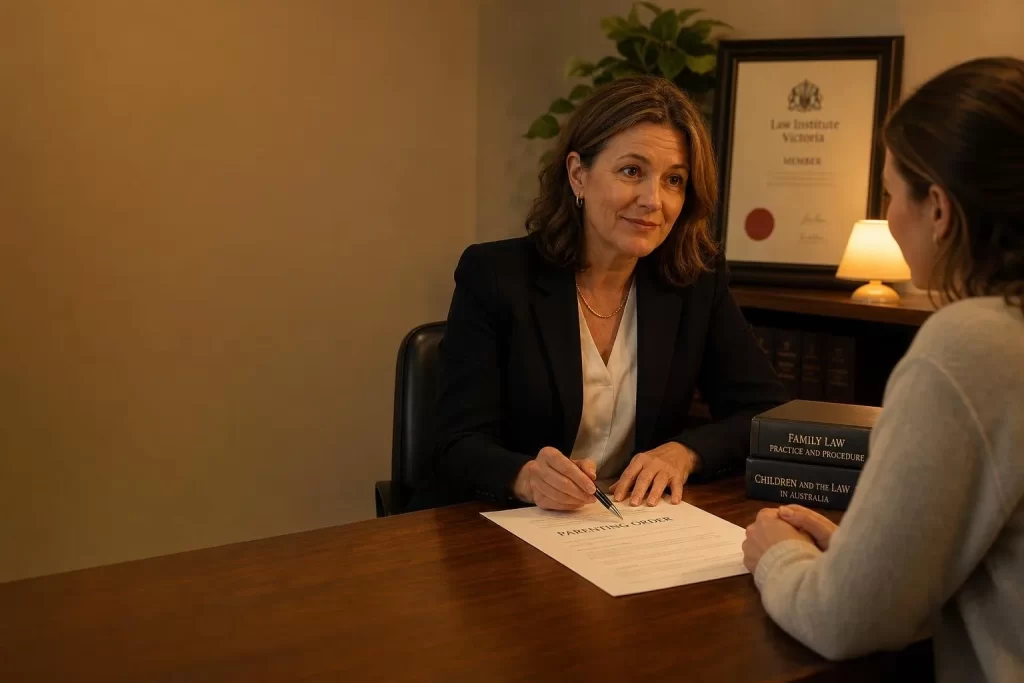

Family dispute resolution helps resolve parenting disputes. Discover its role and benefits. Learn your rights and find out how it can help you today.
Family dispute resolution is a structured, child‑focused mediation process used to help separated parents resolve disagreements about parenting. It is led by an accredited Family Dispute Resolution practitioner and is generally required before filing parenting proceedings in the Federal Circuit and Family Court of Australia.
Key Legal Points
- Family dispute resolution is a child‑focused mediation required before most parenting cases
- s60I certificates are usually needed to start court proceedings about children
- FDR can be exempted for urgency, family violence, or child abuse risks
- Preparation with proposals and documents materially improves FDR outcomes
- Parenting plans record agreements, consent orders make them enforceable
- FDR is quicker, cheaper, and more flexible than contested litigation
- Shuttle and online formats manage risk and reduce conflict during sessions
Definition and Purpose of Family Dispute Resolution
Legal Framework
Family dispute resolution sits within Part VII of the Family Law Act 1975. Except in limited circumstances, parties must attempt FDR before commencing parenting litigation. After an attempt, the practitioner may issue a s60I certificate that is needed to start court proceedings.
Family dispute resolution means a confidential, facilitated negotiation focused on children’s best interests and practical parenting arrangements. The process aims to reduce conflict, narrow issues, and document agreements in a parenting plan or inform consent orders.
When Fdr is Required or Not Required
FDR is usually mandatory for FDR parenting disputes. It is not required where there is family violence, child abuse risk, urgency, or where a party cannot participate effectively. Even where exempt, early legal advice and safety planning remain crucial.
Common Search Intents Addressed
- How family dispute resolution works and what to expect
- When you need a s60I certificate for court
- How mediation family law processes protect children’s interests
- Costs, timelines, and outcomes of FDR parenting disputes
- What happens if FDR fails and how to proceed
Benefits of Family Dispute Resolution for Parents
Child‑centred Outcomes
FDR keeps the focus on the children, encouraging arrangements that are practical for school, health, and routines. Agreements reached collaboratively tend to be more durable and reduce exposure of children to conflict.
Control, Cost, and Speed
Compared with dispute resolution family court litigation, FDR is typically faster and less expensive. Parents retain control of outcomes rather than leaving decisions to a judge, and sessions can be scheduled around work and care commitments.
Confidentiality and Flexibility
Discussions in family dispute resolution are confidential, with limited exceptions for safety. Practitioners can offer shuttle or online formats to manage risk and reduce stress. This flexibility often unlocks pragmatic compromise.
How Family Dispute Resolution Works
Pre‑assessment and Safety Screening
The practitioner conducts intake interviews and risk screening to ensure FDR is appropriate. If unsuitable due to safety or capacity issues, the practitioner will not proceed and may issue a s60I certificate reflecting that FDR was not appropriate.
The Mediation Session
Sessions start with ground rules and agenda setting, then private and joint discussions. Typical topics include time arrangements, changeovers, communication protocols, special occasions, travel, and decision‑making responsibilities.
Documenting Outcomes
If agreement is reached, parents can record it in a parenting plan. For enforceable terms, parties should convert agreed terms into consent orders. Where no agreement is reached, the s60I certificate enables a court application.
Process and Steps to Obtain a S60i Certificate
Step‑by‑step Overview
- Contact an accredited provider and complete intake and safety screening
- Exchange essential information and disclose relevant risks
- Participate in the FDR session, including shuttle options if appropriate
- Record agreement in a parenting plan or prepare consent orders
- If no agreement, obtain the s60I certificate from the practitioner
Types of S60i Certificates
Certificates commonly state: the other party refused or failed to attend; FDR was considered inappropriate; parties attended and made a genuine effort; or parties attended but one did not make a genuine effort. Each has implications for costs and case management.
Practical Examples
In real scenarios, we see shuttle FDR help manage high‑conflict changeovers; school holiday disagreements resolved by calendar mapping; and medical decision disputes settled by allocating roles and tie‑breaker processes.
Common Mistakes in Fdr Parenting Disputes
What to Avoid
- Arriving without a child‑focused proposal or backup options
- Using FDR to re‑litigate relationship grievances
- Refusing interim solutions that could stabilise routines
- Failing to bring key documents like school calendars or medical letters
Patterns We Observe
Common patterns include unrealistic equal time proposals where distance or work hours make them impractical, and over‑detailed plans that collapse on first contact. Balanced, simple, and reviewable arrangements usually perform better.
Deadlines, Limits, and Costs
Timelines and Court Filings
A s60I certificate typically remains valid for 12 months from issue. Urgent applications can proceed without FDR where safety or child risk is present, but courts may still order post‑filing FDR at a suitable stage.
Fees and Funding
Costs vary between community providers and private practitioners. Private family dispute resolution often delivers faster scheduling. Some parties are eligible for reduced fees. Budget also for legal advice to convert agreements into enforceable orders.
What Happens if Family Dispute Resolution Fails
Commencing Proceedings
If no agreement is reached, parents may apply to the Federal Circuit and Family Court with the s60I certificate. The court will triage the matter, consider interim arrangements, and may direct further ADR during the case.
Genuine Effort and Costs
Failure to make a genuine effort at family dispute resolution can influence costs and directions. Courts expect parties to narrow issues and act reasonably. Non‑compliance can attract adverse costs or procedural consequences.
Safety, Family Violence, and Fdr
Screening and Exemptions
Where family violence, coercive control, or child abuse risk exists, FDR may be inappropriate. Practitioners can structure shuttle or online sessions, or deem FDR unsuitable and issue a certificate indicating inappropriateness.
Protective Measures
Safe premises, staggered arrivals, separate rooms, and virtual formats help manage risk. If urgent orders are needed, consider the Court’s duty lists and protections available under family violence legislation alongside parenting proceedings.
Converting Agreements into Enforceable Orders
Parenting Plans Versus Orders
A parenting plan is flexible and useful as a working document but not directly enforceable. Consent orders filed with the Court are enforceable and provide clarity for compliance and enforcement applications.
Drafting Tips
- Use clear handover times, locations, and contingency rules
- Allocate communication methods and response timeframes
- Set review dates and specify dispute escalation pathways
Family Dispute Resolution in Context with Other Adr
Comparing Adr Options
FDR is child‑focused and statutorily integrated into parenting matters. By contrast, commercial mediation focuses on monetary or contractual issues. For broader ADR insights, see Mediation In Family Law.
Linking to Professional Services
Expert assistance with mediation family law is available through Mediation And Dispute Resolution. Professional guidance helps assess suitability, prepare proposals, and draft consent orders efficiently.
Preparing Effectively for Fdr
Evidence and Proposals
Bring school timetables, work rosters, travel time estimates, and health information. Prepare a primary proposal and a fallback option. Keep the child’s best interests at the centre and avoid positional bargaining.
Negotiation Strategies
Use interest‑based negotiation, separate issues into manageable blocks, and test options against practicality. In FDR parenting disputes, incremental agreements, like trial periods with review dates, often unlock longer‑term solutions.
How to Resolve and Next Steps
Practical Guidance
Start with safety screening, attend family dispute resolution prepared, focus on workable routines, and write down agreements clearly. Convert durable arrangements into consent orders to secure enforceability and predictability.
Recommended Actions
- Seek early legal advice to frame realistic parenting proposals
- Book family dispute resolution promptly to preserve momentum
- Use the s60I certificate strategically if court becomes necessary
Frequently Asked Questions
Do I need family dispute resolution before applying to court for parenting orders?
Generally yes. The Family Law Act requires most applicants to attempt FDR and obtain a s60I certificate before starting parenting proceedings. Exemptions apply for urgency, family violence, child abuse risk, or where a party cannot participate effectively. Even when exempt, targeted legal advice and safety planning are recommended.
What is a s60I certificate and how long is it valid?
A s60I certificate is issued by an FDR practitioner after an FDR attempt or assessment. It records attendance and genuine effort, refusal, or inappropriateness. It is typically valid for 12 months from the date of issue, allowing a party to commence proceedings within that timeframe if agreement is not reached.
Is family dispute resolution confidential?
Yes, FDR is confidential and without prejudice, with statutory limits. Practitioners must disclose where there is risk of harm to a child or a person, or where required by law. Otherwise, statements made in FDR are generally inadmissible, encouraging frank discussion and creative problem‑solving.
Can family violence matters still use FDR?
Only if it is safe and appropriate. Practitioners will screen for family violence and may offer shuttle or online FDR with safeguards. If participation is unsafe or inappropriate, FDR will not proceed and a certificate indicating inappropriateness may be issued so the matter can be taken to court promptly.
What happens if we reach agreement at FDR?
Agreements can be recorded in a parenting plan. To make terms enforceable, your lawyer can convert the plan into consent orders for filing with the Court. Clear drafting around times, locations, communication, holidays, and review clauses helps avoid disputes and facilitates smoother implementation.
How much does family dispute resolution cost?
Costs vary. Community providers may have lower fees or sliding scales, while private FDR often offers faster availability at higher rates. Budget separately for legal advice to prepare for sessions and to draft or file consent orders if agreement is reached. Ask providers about concessions.
What if the other parent refuses to attend FDR?
If a party refuses or fails to attend, the practitioner may issue a s60I certificate reflecting non‑attendance. That certificate allows you to commence proceedings. The Court may also consider the refusal in costs and directions, particularly if the refusal was unreasonable in the circumstances.
Legal Disclaimer
Important Notice: The information provided on this website is for general informational purposes only and should not be considered as specific legal advice. Laws may vary between Australian states and territories, and legal requirements can change over time.
For specific legal advice regarding your individual circumstances, please consult with a qualified Australian legal practitioner who can provide guidance tailored to your particular situation.
This content is accurate as of the date of publication. We recommend seeking current legal advice for any legal matters.