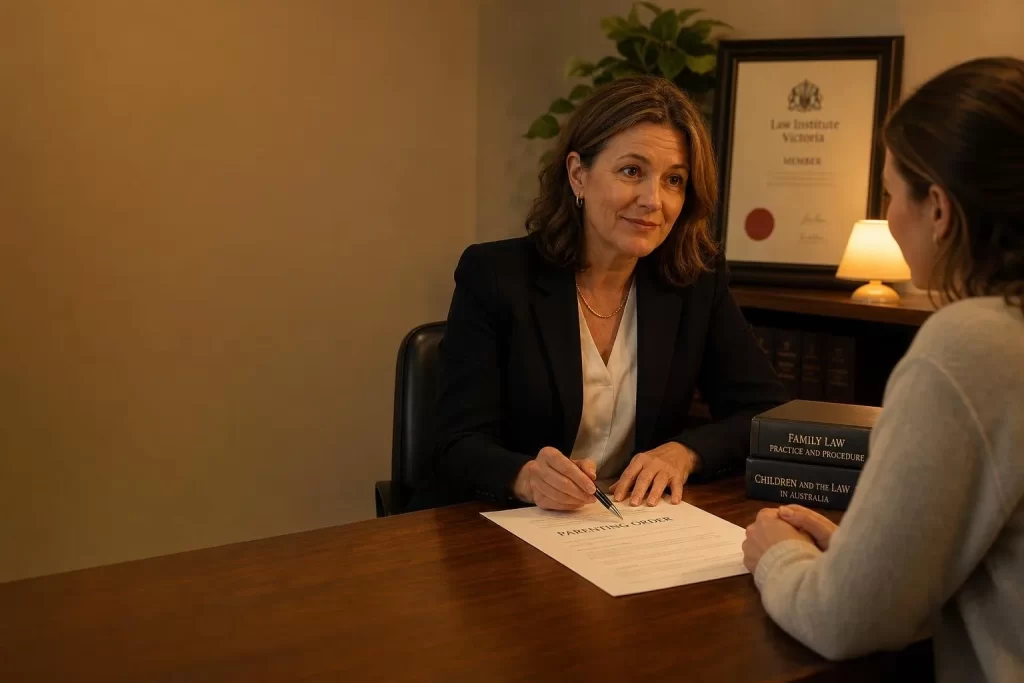

S60I certificate is required in most federal parenting matters to confirm what occurred at family dispute resolution and whether parties made a genuine effort. It is issued by an accredited FDR practitioner and is generally valid for 12 months. Recognised exceptions include urgency and family violence. Without it, the Court may refuse or delay a parenting application.
Key Legal Points
- s60I certificate confirms FDR participation or exceptions before parenting applications
- Required in most parenting matters under Family Law Act 1975 section 60I
- Issued by accredited FDR practitioners after screening and mediation steps
- Five certificate types include non‑attendance and lack of genuine effort
- Certificate usually valid for 12 months from the date of issue
- Recognised exceptions include urgency and family violence or abuse risk
- Costs range from free community FDR to private session fees in AUD
An s60I certificate is a formal record issued by an accredited family dispute resolution practitioner confirming what happened at mediation, and whether parties made a genuine effort to resolve parenting issues. In most parenting cases, it is required before applying to the Federal Circuit and Family Court of Australia for orders.
Definition and Legal Basis
What a S60i Certificate Means
S60I certificate means a document issued under section 60I of the Family Law Act 1975 confirming one of several outcomes of family dispute resolution, commonly called FDR. It is not a finding about who is right, but a gateway to court when agreement is not reached or FDR is inappropriate.
- Confirms attendance or non‑attendance at FDR
- States if a genuine effort to resolve issues was made
- Allows filing of parenting proceedings in most cases
- Does not bind the court on the merits of proposals
- Valid for 12 months from the date of issue
- May be waived where exceptions apply, such as urgency or family violence
Statutory Framework
FDR and the s60I certificate regime sit within the Family Law Act 1975 (Cth) section 60I. The Court must consider whether a certificate has been filed, unless an exception applies. Best interests factors, including section 60CC, still govern any parenting orders made.
Typical Search Intent Questions
- Do I need a s60I certificate before applying for parenting orders
- What does each type of certificate actually mean
- How do I book FDR and what documents are required
- What are the time limits, costs, and exceptions
- What happens if the other parent refuses to participate
When You Must Have a S60i Certificate
Applications for Parenting Orders
Most applications seeking parenting orders require a s60I certificate filed with the initiating application. This includes first applications and applications to vary unless there is a material change and an exception is engaged.
Recognised Exceptions
Exceptions include urgency, risk of family violence or child abuse, impracticability of attending, or where a party is unable to participate. In real scenarios, we see exceptions raised where safety concerns or relocation deadlines make FDR unsuitable.
Genuine Effort Requirement
Where FDR proceeds, parties must make a genuine effort. A s60I certificate can indicate that someone did not make a genuine effort, which the Court may later consider on costs or case management.
Process and Steps to Obtain the Certificate
Booking and Screening
- Contact an accredited FDR practitioner or service for intake
- Undergo screening for suitability and safety, including family violence risk
- Provide basic background and parenting issues to frame the mediation
Learn more about the mediation landscape in Mediation In Family Law, which outlines how structured facilitation supports parenting negotiations.
Conducting Fdr
- Participate in joint or shuttle sessions, in person or online
- Exchange proposals, identify issues, and explore options for agreement
- If matters resolve, document a parenting plan or draft consent orders
Issuing the S60i Certificate
If appropriate, the practitioner issues a s60I certificate stating one of five outcomes. You will receive a copy to attach to any future court application. Keep the original safe and note its 12‑month validity period.
Types of S60i Certificates and Their Implications
The Five Certificate Outcomes
- One party refused or failed to attend FDR
- Mediation was considered inappropriate to conduct
- Both attended and made a genuine effort
- Both attended but one or both did not make a genuine effort
- Mediation commenced but was not completed
Practical Effects in Proceedings
The Court can consider a s60I certificate that records a lack of genuine effort when making procedural or costs orders. It does not predetermine care arrangements or final outcomes.
Examples from Practice
Common patterns include certificates issued where one parent repeatedly cancels, or where shuttle FDR proceeds but stalls on school choice. In some cases, genuine effort is recognised despite no agreement due to entrenched conflict.
Common Mistakes and How to Avoid Them
What Commonly Goes Wrong
- Letting the certificate expire before filing an application
- Arriving unprepared, without proposals or key information
- Misunderstanding that a s60I certificate equals consent to orders
- Ignoring safety concerns instead of requesting shuttle or separate sessions
- Failing to consider interim arrangements for the child during delays
Real-world Fixes
Prepare concise proposals and a parenting timetable. If safety is a concern, request shuttle FDR or videoconference. If urgent, seek legal advice on whether an exception to the s60I certificate requirement applies.
Deadlines, Limits and Costs
Timeframes and Validity
A s60I certificate is generally valid for 12 months. FDR services can book out weeks in advance. Where urgency exists, raise it at intake to assess exceptions and interim arrangements.
Fees and Funding
Costs vary from free or low‑cost community providers to private practitioners charging per session. Some matters qualify for Legal Aid. Clarify fees, cancellation policies, and additional charges for reports or extra sessions.
Consequences of Not Having a Certificate
Impact on Filing and Case Management
Without a required s60I certificate, the Registry may not accept a parenting application. The Court can stand the matter over and direct parties to attempt FDR first, causing delay and added cost.
Costs and Adverse Inferences
If a party fails to make a genuine effort, costs orders may be considered. In persistent refusal cases, the Court views the s60I certificate as relevant to compliance with pre‑action procedures.
Practical Tips for a Productive Fdr
Preparation Checklist
- Focused agenda of issues, such as time arrangements and holidays
- Child‑centred proposals aligned to schooling, routines, and health
- Backup options in case your primary proposal is not accepted
- Documents for practical needs, for example contact details for changeovers
Negotiation Approach
Use neutral language, park historical grievances, and test options against best interests. In real scenarios, we see progress when parents trial short interim timetables, then review after the school term.
How to Resolve and Next Steps
Turning Agreement into Orders
If agreement is reached, convert it to consent orders for enforceability. Where FDR fails, use your s60I certificate to file, and consider interim orders to stabilise arrangements.
Getting Professional Help
Expert assistance with parenting disputes is available through Mediation And Dispute Resolution, including advice on safety planning, exceptions, and drafting consent orders anchored in best interests.
How Courts Treat S60i Certificates
Relevance to Parenting Orders
The Court focuses on the child’s best interests. A s60I certificate confirms compliance with pre‑action steps but does not prove allegations. Evidence still drives outcomes on risk, capacity, and stability.
Interaction with Parenting Plans
Where FDR produces a parenting plan, it can inform later orders. If negotiations collapse, the s60I certificate allows timely filing to address pressing parenting issues.
Linking Fdr to Broader Family Law Strategy
Integrating with Child Support and Property
Parenting talks often intersect with school fees, extra‑curriculars, or handover logistics. Parallel planning can reduce friction. If property talks stall, consider commercial mediation models to frame timelines.
Staying Child Focused
Keep proposals developmentally appropriate. Common patterns include step‑ups for very young children and more overnights as routines settle. Use your s60I certificate timeline to avoid drift.
Common Questions about the S60i Certificate
Can I Apply without One
Only where a recognised exception applies, such as urgency, risk, or impracticability. Otherwise, obtain a s60I certificate first to avoid delay in filing parenting orders.
What if the Other Parent Will Not Attend
The practitioner can issue a s60I certificate recording non‑attendance, enabling you to file. The Court may later consider that failure in directions or costs.
Frequently Asked Questions
Do I always need a s60I certificate before filing for parenting orders?
Usually yes. A s60I certificate is required before commencing most parenting proceedings. Exceptions apply for urgency, family violence, child abuse risk, impracticability, or inability to participate. If you rely on an exception, provide evidence explaining why FDR was unsuitable and ask for appropriate interim orders.
How long is a s60I certificate valid?
Generally 12 months from issue. If you have not filed within that period, you will likely need fresh FDR or to establish an applicable exception. Track expiry dates early to avoid repeating intake, screening, and mediation steps, and to maintain momentum in parenting negotiations.
What does ‘genuine effort’ mean in FDR?
It means participating in good faith, engaging with proposals, and being prepared to explore options. The practitioner may issue a certificate recording that a party did not make a genuine effort. While not determinative, the Court can consider it in case management and costs.
Can safety concerns stop FDR and still allow filing?
Yes. If family violence or child abuse risks make FDR inappropriate, the practitioner can issue a certificate to reflect that, or you may rely on an exception. Provide risk details, consider shuttle or online formats, and seek interim orders to address immediate safety and contact.
What if the other parent refuses to attend mediation?
If they refuse or fail to attend, the practitioner can issue a certificate noting non-attendance. You can then file your application. The Court may weigh that behaviour when setting directions or considering costs, especially if refusal caused unnecessary delay.
Can we turn an FDR agreement into enforceable orders?
Yes. Convert the agreed parenting plan into consent orders filed with the Court. Orders are enforceable and provide clarity for schools, health providers, and travel. Obtain legal advice to ensure terms are workable, child-focused, and aligned with best interests considerations.
Legal Disclaimer
Important Notice: The information provided on this website is for general informational purposes only and should not be considered as specific legal advice. Laws may vary between Australian states and territories, and legal requirements can change over time.
For specific legal advice regarding your individual circumstances, please consult with a qualified Australian legal practitioner who can provide guidance tailored to your particular situation.
This content is accurate as of the date of publication. We recommend seeking current legal advice for any legal matters.