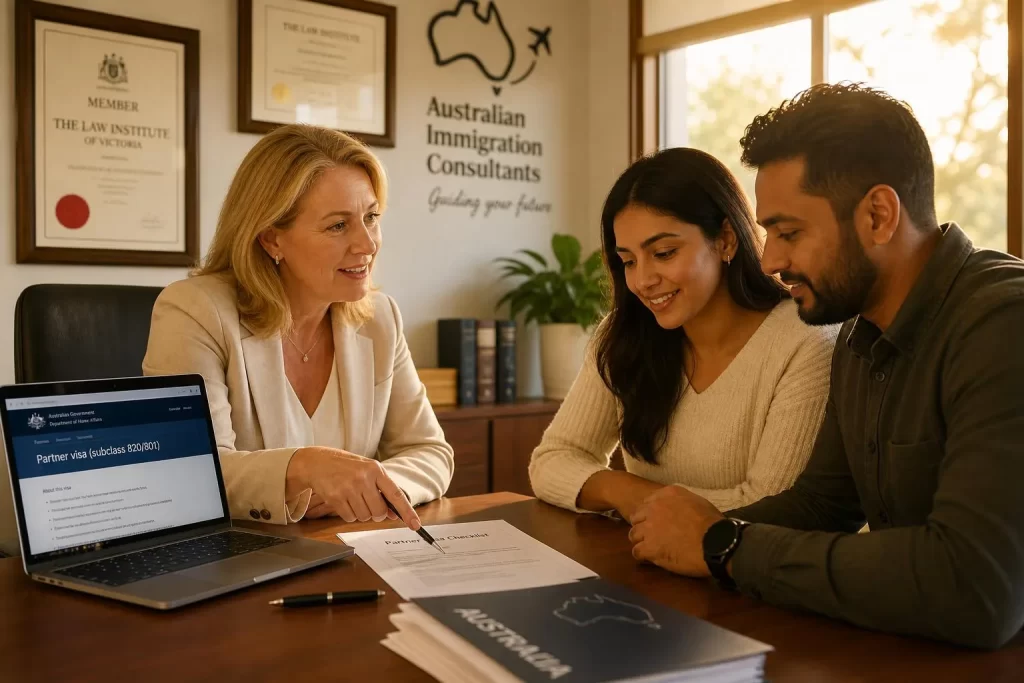
The partner visa allows an Australian citizen, permanent resident, or eligible New Zealander to sponsor a spouse or de facto partner under federal migration law. Applicants must prove a genuine, continuing relationship and meet health, character, and sponsorship criteria. The process involves two stages, onshore or offshore, with detailed evidence and statutory declarations. Refusals can be reviewed at the AAT, subject to strict deadlines.
Key Legal Points
- Partner visa is a two‑stage pathway to Australian permanent residence
- Eligibility turns on genuine, continuing marriage or de facto relationship evidence
- Sponsor must be an Australian citizen, permanent resident, or eligible New Zealander
- Provide comprehensive relationship evidence across four recognised relationship aspects
- Strict health, character, and sponsorship limitations apply under federal immigration law
- Processing times vary; onshore applicants may receive a bridging visa
- Government charges are significant; budget for medicals, police checks, translations
The partner visa lets an eligible Australian sponsor their spouse or de facto partner for temporary and then permanent residence. It operates under federal immigration law and requires detailed evidence of a genuine, continuing relationship. This guide explains criteria, documents, timelines, and how to avoid refusal.
Understanding Partner Visa Applications
Legal Framework
Partner visas are created by the Migration Act 1958 (Cth) and the Migration Regulations 1994 (Cth). Core criteria sit in Schedule 2 for subclasses 820/801 and 309/100. Policy guides timing and evidence, but the Regulations govern decision making. See the detailed Migration Regulations 1994 (Cth) Schedule 2 criteria for statutory requirements.
Key Definitions
In simple terms:
- Partner visa means a two‑stage grant, temporary then permanent
- Onshore is Subclass 820/801, usually with a bridging visa
- Offshore is Subclass 309/100, applicant must be outside Australia at decision for the 309
- De facto generally requires 12 months cohabitation or a registered relationship
- Sponsor is an Australian citizen, permanent resident, or eligible New Zealander
- PICs are public interest criteria, including health and character checks
Who Qualifies
Eligibility turns on a married or de facto relationship that is genuine, continuing, and mutually exclusive. Applicants must meet health and character criteria, and sponsors must satisfy sponsorship rules and any limitation periods if they have sponsored before.
Partner Visa Requirements
Relationship Requirements
Decision makers assess the four aspects: financial, household, social, and commitment. Robust evidence across these reduces refusal risk. In real scenarios, we see applications succeed where bank accounts, leases, and social proof align over time, not just at the point of application.
- Joint finances, shared liabilities, and evidence of pooling resources
- Household arrangements, joint responsibility for day‑to‑day living
- Social recognition, photos, invites, statements from friends and family
- Commitment indicators, long‑term plans, travel, communications
Sponsorship and Character
Sponsors must lodge a sponsorship form, meet character checks, and disclose any relevant history, including offences or previous sponsorships. Certain sponsors face limitations, for example where multiple prior sponsorships or short intervals apply.
Health, Debts and Public Interest
Applicants must complete health examinations and provide police clearances from each country lived in for 12 months or more. Outstanding public health debts or adverse character findings can prevent grant under applicable PICs.
Partner Visa Process and Steps
Choosing the Right Stream
Select between onshore 820/801 and offshore 309/100. Onshore applicants commonly receive a bridging visa with work and Medicare eligibility after activation. Offshore applicants must be outside Australia for Subclass 309 decision and may plan travel accordingly.
Step‑by‑step Process
- Confirm eligibility, including de facto length or marriage validity under Australian law
- Choose onshore or offshore pathway and check visa status constraints
- Prepare forms, sponsor declarations, and compile comprehensive relationship evidence
- Lodge both application and sponsorship, pay charges, and upload documents
- Complete biometrics, health exams, and police checks as requested
- Respond to requests for information, then await temporary stage decision
- Provide further evidence at the permanent stage invitation, typically two years later
Evidence and Document Preparation
Quality beats quantity. Organise documents chronologically, label clearly, and address each of the four aspects. Statutory declarations from the couple and two Australian witnesses carry weight when they reference specific dates and shared commitments.
Common Mistakes in Partner Visa Files
What to Avoid
Common patterns include uploading bulk photos without context, omitting police checks, or ignoring sponsorship limitations. Mismatched addresses or finances undermine credibility. Do not assume marriage alone proves the relationship; the evidence must still address the four aspects.
Real‑world Examples
We often see refusals where applicants rely only on recent joint statements while living separately for work with no explanation. Conversely, long‑distance couples succeed where they evidence ongoing travel, joint plans, and consistent communications alongside financial support.
Deadlines, Processing Times and Costs
Time Factors
Processing times vary and are sensitive to completeness and background checks. Onshore applicants generally hold a bridging visa until a decision. The permanent stage assessment often occurs about two years after lodgement of the temporary stage, subject to policy and caseload.
Fees and Financial Considerations
Government charges are substantial and increase periodically. Budget for health examinations, police clearances, translations, and any courier or notary fees. Keep receipts and ensure translations meet certification rules. Plan finances assuming several months to more than a year before a temporary decision.
Consequences of Non‑compliance or Refusal
If Circumstances Change
Notify the Department if your relationship, address, or contact details change. Relationship breakdown before permanent grant usually affects eligibility, with limited exceptions such as family violence or death of the sponsor. Providing false or misleading information risks refusal and cancellation.
Review and Appeals
Most refusals attract merits review at the Administrative Appeals Tribunal within strict deadlines. Learn more about common refusal triggers in Why Australian Visa Applications Get Refused, then consider tailored advice on prospects and strategy.
How to Resolve Issues and Next Steps
Practical Guidance
If evidence is thin in one aspect, bolster other aspects and add a cogent relationship timeline. Address anomalies directly, for example periods of separate living, with supporting documents. Keep evidence flowing after lodgement to support the permanent stage.
When to Seek Professional Help
Complex histories, prior refusals or cancellations, sponsorship limits, or family violence issues warrant expert guidance. Professional representation for partner visa matters is available through Family Partner Visas, including evidence strategy and review options.
Benefits, Risks and Practical Implications
Real‑world Impact
The partner visa can deliver work rights, Medicare access onshore, and eventual permanent residence. It can also enable travel flexibility for offshore applicants once the temporary stage is granted. Families gain stability while meeting their obligations.
Managing Risk
Mitigate risk by accurate forms, consistent evidence, and prompt responses to Departmental requests. Keep copies of all submissions and update police and health checks if validity lapses. A methodical approach reduces delays and review exposure.
Search Intent Answered: Eligibility, Documents and Timeline
Eligibility Snapshot
To be eligible for a partner visa, prove a genuine relationship, meet health and character criteria, and secure an eligible sponsor. De facto couples typically need 12 months’ cohabitation or a registered relationship if available in their state.
Document Checklist
- Passports, identity, and birth or marriage certificates
- Relationship timeline and statutory declarations
- Joint finances, leases, utilities, insurance, travel records
- Photos with captions, social media posts, and third‑party statements
- Police checks and health examination results
Frequently Asked Questions
Which partner visa should I choose, onshore 820/801 or offshore 309/100?
Choose onshore 820/801 if you are in Australia and can validly lodge, often receiving a bridging visa with work rights after lodgement. Choose offshore 309/100 if you will remain overseas for the temporary decision. Consider current visa status, travel plans, and the validity of health and police checks.
What evidence best proves a genuine de facto relationship?
Provide consistent documents across four aspects: joint finances, shared household, social recognition, and commitment. Examples include joint bank statements and liabilities, leases and utilities, photos and invitations, and a detailed relationship timeline. Statutory declarations that cite specific dates and shared responsibilities are persuasive.
How long does a partner visa take to process?
Timeframes vary with case complexity and completeness. Temporary stage decisions can take several months to over a year. The permanent stage is commonly assessed about two years after the temporary application. Ensuring clean police checks, completed health exams, and well‑organised evidence can reduce delays.
Can a relationship breakdown affect my partner visa application?
Yes. A breakdown before permanent grant usually affects eligibility. Limited exceptions may apply, including where family violence is established or the sponsor dies. You should notify the Department promptly and obtain legal advice on alternative options or evidence required to rely on an exception.
What happens if my partner visa is refused?
Most refusals carry merits review rights at the Administrative Appeals Tribunal, with strict filing deadlines. You must address the reasons for refusal with targeted evidence and submissions. If review rights are unavailable, consider whether a fresh application or another visa pathway is feasible after professional advice.
Do sponsors face limits on how many times they can sponsor?
Yes. The Regulations impose limitations on repeat sponsorships and require time between sponsorships, with discretion in compelling circumstances. Sponsors must also meet character requirements and disclose prior sponsorships. Breaching limitations can lead to refusal of the sponsorship and, in turn, the visa application.
Will I get Medicare on a partner visa application?
Onshore applicants for the 820 stage are usually eligible for Medicare once a valid application is lodged and the bridging visa is in effect, subject to Services Australia processes. Offshore applicants generally are not eligible until they enter Australia on a granted partner visa.
Legal Disclaimer
Important Notice: The information provided on this website is for general informational purposes only and should not be considered as specific legal advice. Laws may vary between Australian states and territories, and legal requirements can change over time.
For specific legal advice regarding your individual circumstances, please consult with a qualified Australian legal practitioner who can provide guidance tailored to your particular situation.
This content is accurate as of the date of publication. We recommend seeking current legal advice for any legal matters.